


Placemaking & Experiential Art
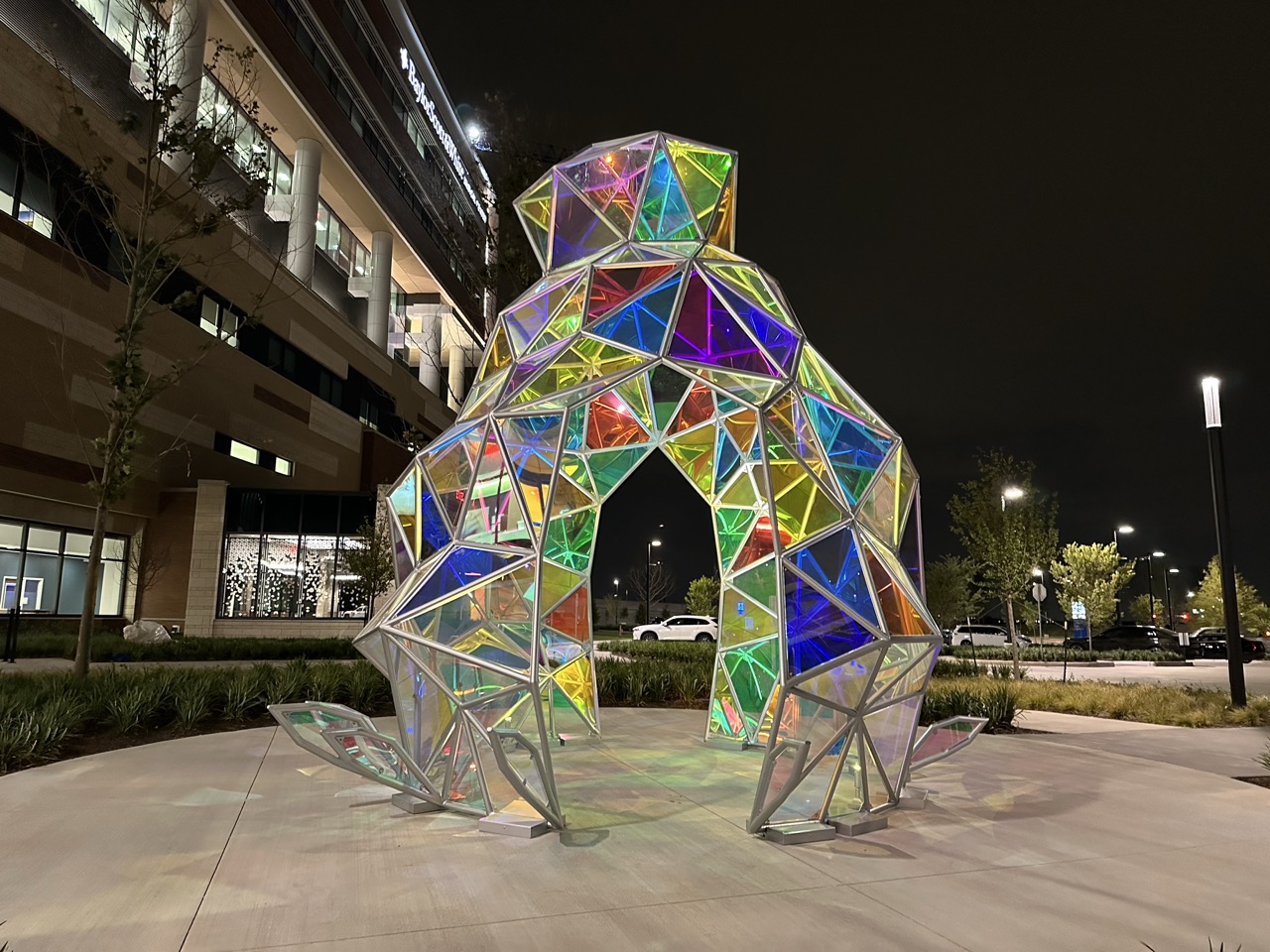
Art That Defines a Place
We partner with architects & designers as well as developers, owners, general contractors to design signage and environmental graphics that shape how places are experienced and remembered.
Placemaking today is not decoration. It is an integrated identity design at the intersection of architecture, branding, and built environment execution. We translate that identity into murals, wayfinding systems, sculptural graphics, environmental storytelling, and large-scale installations that perform within real-world construction and schedule constraints.
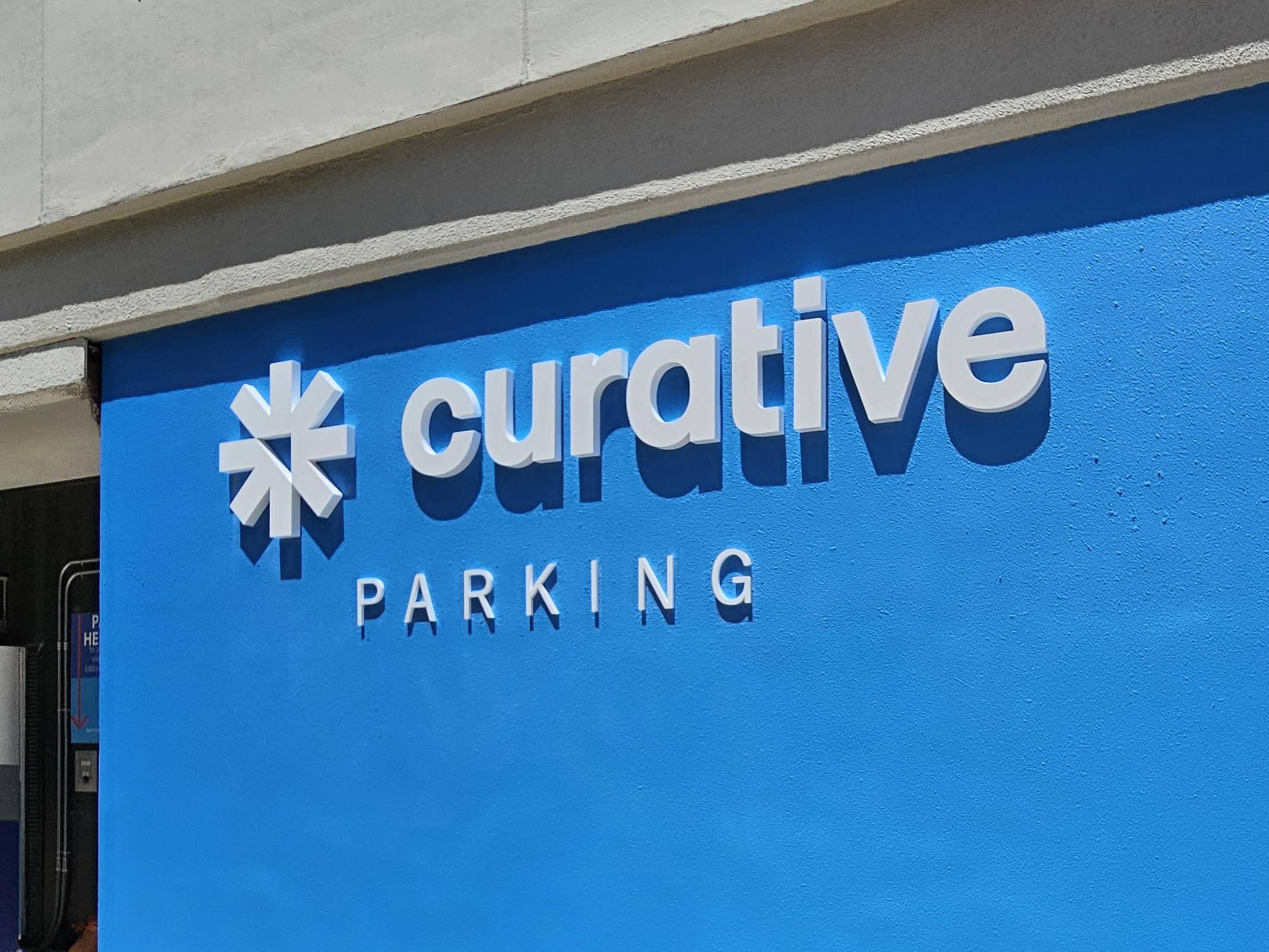
At Baylor Scott & White, art and graphics were integrated into the development vision from the ground up, creating a unified visual identity that anchors the property and strengthens its sense of place. The Curative Mural transforms a functional surface into a narrative landmark, reinforcing both community connection and brand presence on a larger scale.
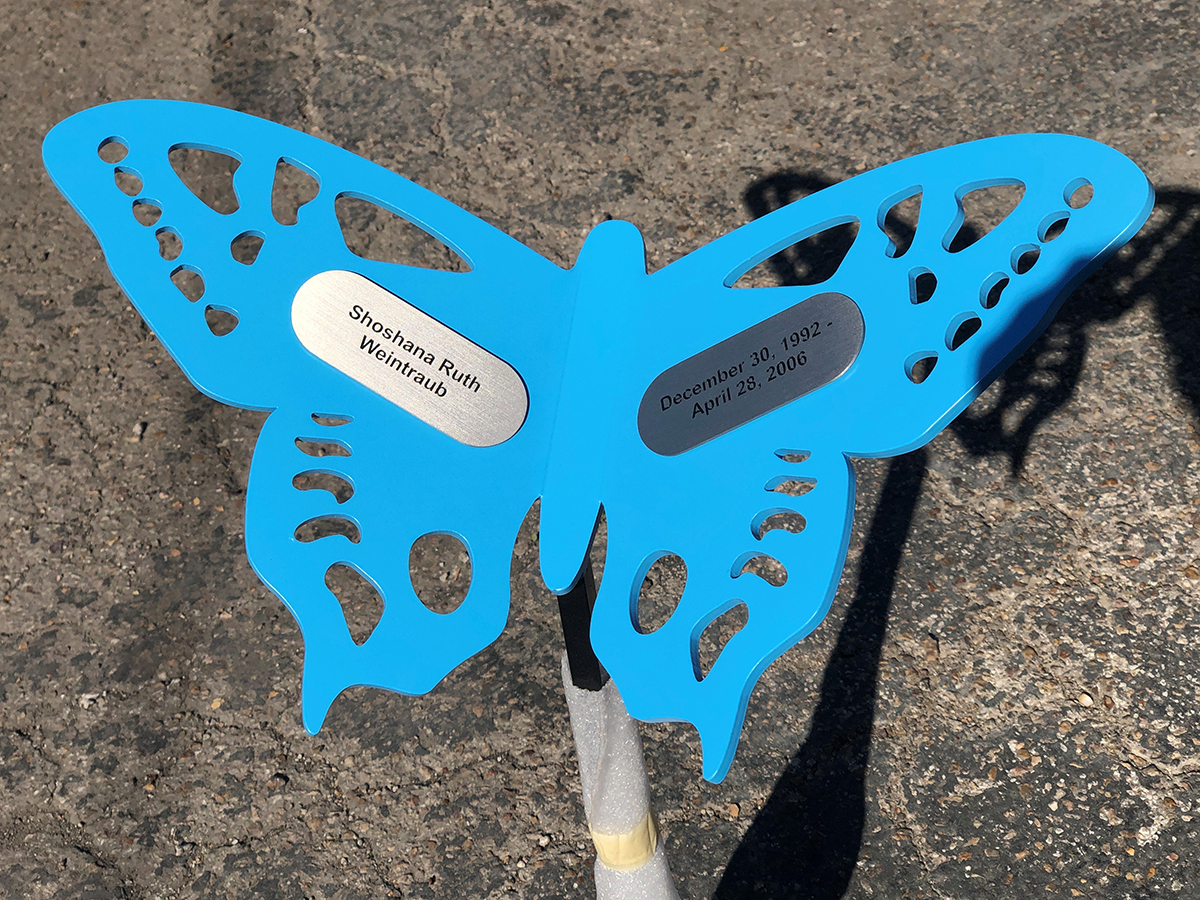
At Rosewood Elementary, environmental graphics and the Butterfly installation introduce color, movement, and emotional clarity into the learning environment, turning circulation and outdoor space into moments of discovery and engagement.
At the Mueller Southeast Greenway Skate Park canopies, a combined system of structure and graphic expression brings energy, motion, and identity into one of the district’s most active public spaces, extending placemaking into infrastructure itself.
Each project is designed to perform; visually, structurally, and contextually, within the realities of construction, while elevating the long-term value of the asset.
Placemaking & Experiential Art
Projects






Testimonials
Questions we hear most
Answers from the team that designs, documents, fabricates, and installs the work.
Yes, and most of our projects run that way. Architects and interior designers set the intent for a space; we design the signage and graphics to belong to it, then take responsibility for what the drawings do not settle — engineering, code, mounting conditions, fabrication, and installation. On Moody Center, for example, we worked through multiple design iterations with Gensler to make high-concept sign proposals buildable without losing the design integrity the venue demanded.
Yes. Large-format printed graphics, painted murals, dimensional wall elements, glass film, and applied patterns are all part of the discipline, and often they do more for a space than a sign does. We design them to the architecture, specify materials that hold up to the building's use and cleaning regime, and coordinate the installation with the finish trades so the graphic goes on a surface that is ready for it.
Placemaking is the deliberate design of a space so that people recognize it, gather in it, and remember it — through art installations, large-scale graphics, sculptural identity elements, lighting, and the moments along a route where a building or district reveals what it is about. It overlaps with public art and with signage but is neither one on its own. The measure of success is whether people describe the place by name and meet each other there.
Developers and property owners establishing a new district or destination, cities and public agencies activating civic space, venues and campuses building identity into the arrival experience, and institutions marking a founding moment. At Moody Center the commemorative plaque of Matthew McConaughey's original napkin sketch is a small example: authentic Austin storytelling built into the building rather than hung on it.
By engineering them as building elements, not artwork. Sun, water, wind load, vandalism, and cleaning all get designed for — material selection, finishes rated for exterior exposure, structural attachment, drainage, and access for maintenance. Our in-house engineering team reviews the concept before it is fabricated, and we build samples of any finish that has to survive outside, because the difference between a ten-year installation and a two-year one is almost always in the details no one sees.
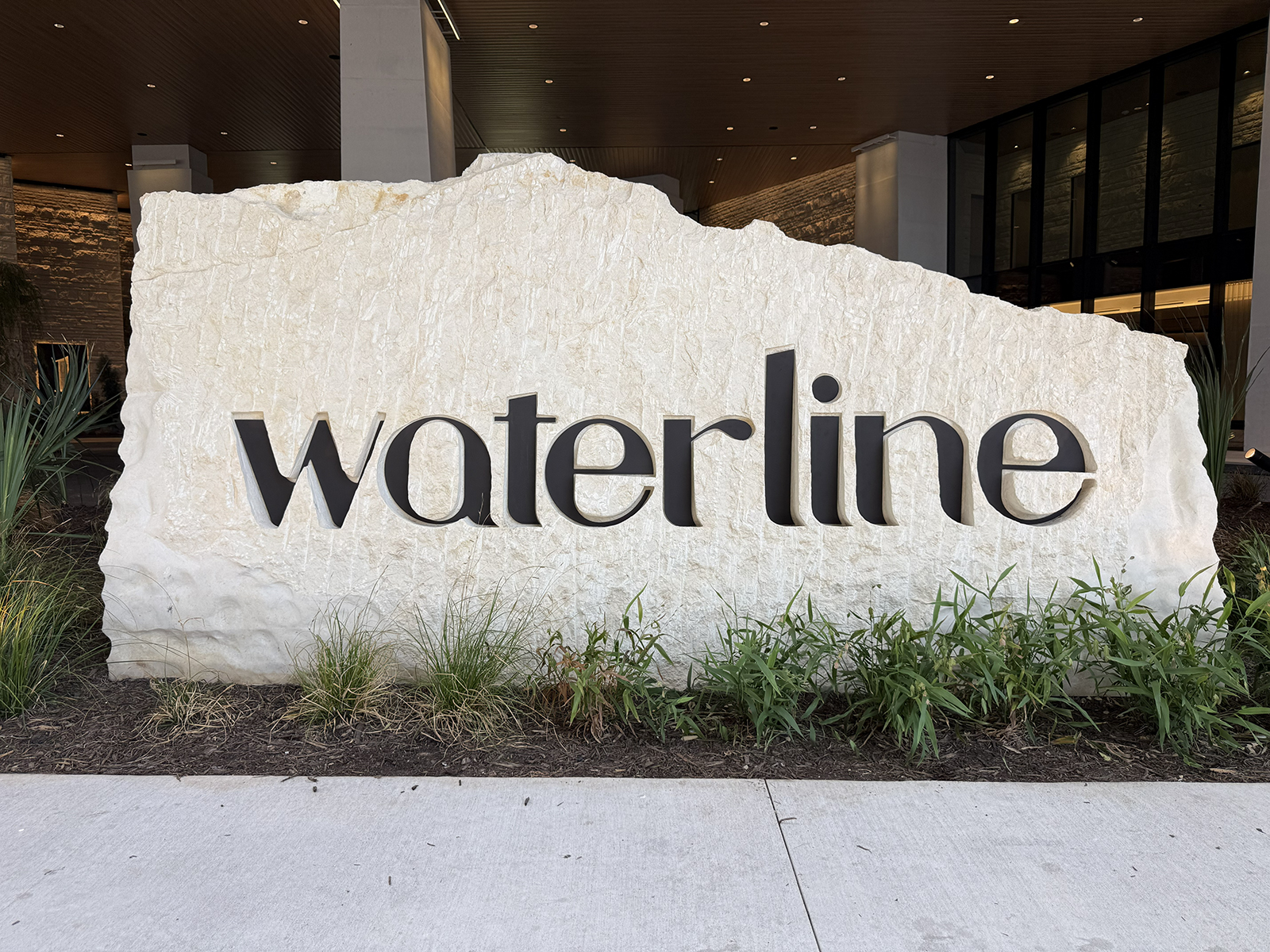
By giving the shared spaces a system of their own. Retail, office, residential, and hospitality uses each need their own identification, but the arrival, the parking, the public routes, and the district identity belong to the whole project. Waterline holds a hotel, an office tower, residences, and public space in one 74-story landmark, and the approximately 5,500 signs across those four environments were designed as one program so the building reads as one address.